
Posts from April 15th, 2020
Subscribe and receive email notifications of new blog posts.
 RSS Feed
- 2026 | 4 Posts
- 2025 | 4 Posts
- 2024 | 23 Posts
- 2023 | 14 Posts
- 2022 | 76 Posts
- 2021 | 78 Posts
- 2020 | 64 Posts
- 2019 | 91 Posts
- 2018 | 93 Posts
- 2017 | 107 Posts
15
Where to Donate Homemade Masks Around Northeast Ohio
Let's be honest — these last few weeks have been tough on everyone.
To say that COVID-19, also known as the coronavirus, has disrupted life around the world is an understatement. Within a matter of weeks, our everyday lifestyles were completely altered in unprecedented ways — so much so that the CDC recommends that all men, women, and children wear protective masks over their mouth and nose when leaving the house. This is, understandably, a scary reality for all of us, but it's an especially frightening way of life that our essential workers have to adopt.
At Cutler Real Estate, we want to support our family members, friends, neighbors, and service workers in the communities throughout Northeast Ohio in any way we can. One way that we can unite and proactively slow the spread of coronavirus is to make, wear, and donate homemade masks. You can make these masks from many items that you already have in your home. Let's go over a few ways that you can make these masks at home, why you can protect yourself by wearing them in public, and how do donate these masks and other vital medical supplies to facilities around Northeast Ohio.
Why Make & Wear Homemade Masks?
View this post on Instagram
Sadly, there are thousands of confirmed coronavirus cases in Ohio. Until widespread accessibility to testing, more effective treatment options, and a better understanding of the virus itself become a reality, we need to take every opportunity we can to slow the spread. This means practicing social distancing by staying in our homes as much as possible and always wearing a protective mask whenever we leave home.
Although the virus itself is microscopic and can pass through most face coverings, the virus often attaches itself to water molecules that come out of our noses and mouths when we sneeze or cough. Many types of fabric can effectively contain most of these molecules, which means any type of face covering is better than none at all.
While officials ask that all non-medical personnel refrain from purchasing the N95 surgical masks and procedure masks so that our healthcare workers who come in contact with this virus on a daily basis have access to them, the CDC encourages all individuals to make their own face masks. Currently, JOANN fabric and craft stores across the nation have free tools, supplies, and guidance available for anyone wanting to make masks. Many other businesses and organizations around Northeast Ohio are also providing supplies to those who want to join the effort and support the community.
How to Sew a Homemade Mask
View this post on Instagram
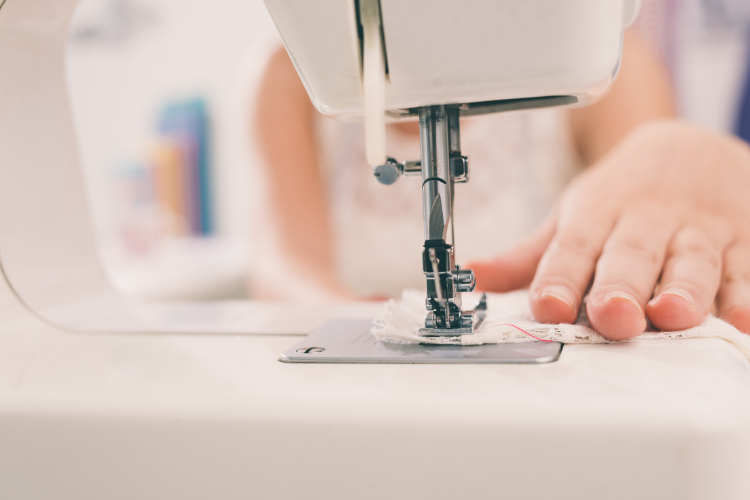
There are two ways that you can make a homemade mask, the first of which is to sew one. Here are the abridged UH-approved steps to make your own (full directions and materials needed available at this link).
- Step 1: Print out a pattern (composed of A and B pieces) and cut them out on paper. Place these paper cut-outs on the fabric and cut out two of the A and two of the B.
- Step 2: Align both A pieces together and sew the pattern together with ¼" seam. Repeat for the B pieces.
- Step 3: Sew the exterior piece of the mask to the interior piece of the mask.
- Step 4: Thread a sturdy wire like a pipe cleaner or paperclips underneath your stitching.
- Step 5: Insert a fabric tie and secure it with stitching.
- Step 6: Insert a filter material such as a coffee filter into the center of the mask between the fabrics.
How to Make a Homemade Mask Without Sewing
An alternative way that you can make a mask is with a simple pair of scissors. While you can use any fabric on-hand, it's suggested that you use at least two layers of cotton. A bandana, old shirt, or pillowcase are good options. You can fold and tie these fabrics around your face, with or without a filter inserted into the center. You can also cut out ear holes or use ties, rubber bands, or other straps to secure it around your face.
Ideally, this fabric will completely cover your face from the bridge of your nose down underneath your chin. It shouldn't restrict your breathing or speaking, but it must be thick enough to prevent water molecules from passing through the fabric. Please also remember to refrain from touching the front of your mask as that could place your hands in contact with the virus, which you could potentially spread to other parts of your face or to others you come in contact with.
Why You Should Make & Donate Homemade Masks
View this post on Instagram
You have the option of either disposing of your mask or washing it in the washing machine for safe reuse. If you're social distancing, you'll ideally only need to wear your mask a limited number of times throughout our quarantine. Unfortunately, our healthcare workers are constantly exposed to potentially infected patients which means their supply usage is drastically higher.
Believe it or not, healthcare workers in Ohio will use 13 N95 face masks, 14 protective gowns, and 36 pairs of medical gloves while caring for a patient in the Intensive Care Unit over a 24-hour period. As potential new coronavirus cases continue to rise, as well as the daily need for medical care not associated with the virus, our healthcare workers will need more masks than ever before.
Where You Can Donate Homemade Masks in Northeast Ohio
View this post on Instagram
There are dozens of medical facilities around the area that desperately need masks. Here are a few that you can send homemade masks and other supplies to right now:
- Summa Health System is in need of homemade masks, which can be delivered to their Corporate Office or mailed to their Volunteer Office.
- University Hospitals in need of masks and other medical supplies that can be mailed in or dropped off at various UH locations. Many UH locations also have mask-making materials available for pick-up. They are also sourcing corporate materials and manufacturing capabilities that can be arranged via email.
- Akron's Children's Hospital is in need of homemade masks, donations of which can be arranged through email.
- Cleveland Clinic is in need of medical supply donations which can be dropped off at curbside delivery sites throughout Northeast Ohio.
- Mercy Medical Center is in need of medical equipment donations and cleaning supplies which can be arranged for donation through the Mercy Supply Chain department.
- Aultman Health Foundation is running low on all Personal Protective Equipment (PPE) and is asking for donations of PPE, materials to create masks, and seamstress assistance in creating the masks. Donations can be arranged on their website.
In This Together
If you know of any other healthcare or frontline facilities that need masks or other vital medical supplies for their essential workers, please tell us in the comments below.







The Cutler Real Estate® word mark is a registered trademark owned by Cutler and Associates, Inc.
Privacy Policy / DMCA Notice / ADA Accessibility


