
Steve Burgess Blog
 RSS Feed
Subscribe and receive email notifications of new blog posts.
RSS Feed
- 2026 | 4 Posts
- 2025 | 4 Posts
- 2024 | 23 Posts
- 2023 | 14 Posts
- 2022 | 76 Posts
- 2021 | 78 Posts
- 2020 | 64 Posts
- 2019 | 91 Posts
- 2018 | 93 Posts
- 2017 | 107 Posts
Cincinnati & Northern Kentucky | 61 Posts
Columbus & Central Ohio | 70 Posts
Explore Ohio | 95 Posts
Home Inspiration | 4 Posts
LoLo Gifts | 33 Posts
Northeast Ohio | 195 Posts
Real Estate | 103 Posts
Uncategorized | 1 Posts
September
15
15
10 of the Most Haunted Places in Ohio
Whether you're driving down a deserted winding road, cozying up in the house on a dark and stormy night, or hanging out around the campfire, scary stories are a fun way to pass the time. Ohio has its fair share of historical hauntings, some of which are almost too terrifying to be entertaining. From castles abandoned by their makers to old prisons with storied pasts, our state is filled with spirits both friendly and foul.
We rounded up a few of the most haunted locales in Ohio, all with a spooky story of their own. Read on if you dare — you might just meet some of the region's most iconic ghosts.
The Most Haunted Places in Ohio Include:


The Ohio State Reformatory| Schwartz Castle | The Cincinnati Subway | Staley Road | The Franklin Castle | The Akron Civic Theatre | Squire's Castle | The Sedamsville Rectory | The Golden Lamb | The Fudge Road Bridge
The Ohio State Reformatory
Mansfield, Ohio
Photo courtesy of Dennis Cabrera via the Ohio State Reformatory
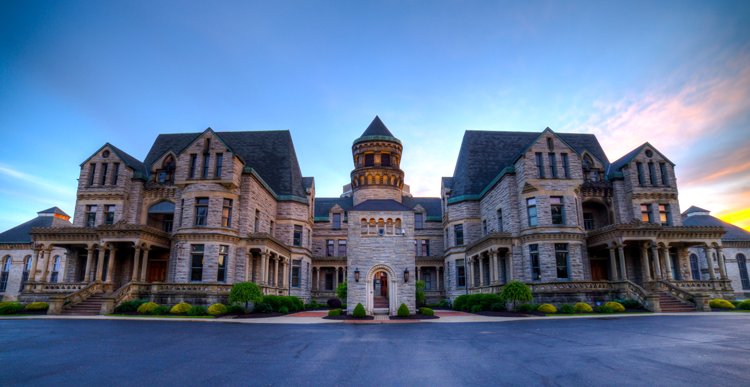
As the prison that served as a main filming location for The Shawshank Redemption (1994), Fallen Angels (2006), Air Force One (1997), and The Wind is Watching (2013), the Ohio State Reformatory is creepy enough to have gained a national reputation. The site was notorious for countless violent instances when it was active, and now the ghosts of ex-prisoners are said to heckle visitors as they pass. In fact, the Ohio State Reformatory is so haunted that it has now become somewhat of a tourist attraction, hosting regular tours, a spectacularly terrifying haunted house, and dining and lodging onsite.Schwartz Castle
Columbus, Ohio Like all fantastic scary stories, this one starts with love. Frederick William Schwartz, a successful German businessman and apothecary owner, built the impressive home on Columbus's 3rd Avenue to impress his fiancé, who still lived in Germany. Schwartz adored this woman and spared no expense in his construction of the mansion, making sure to include elaborate windows, a turret, a ballroom and mosaic tile floors. Before they were married, however, she called off the wedding, and Schwartz spiraled into insanity. He became a recluse, growing his hair long, wandering around the neighborhood barefoot, sunbathing in the nude on the roof and indulging in occult rituals. During this time, he also added to the castle, building a secret room, towering ladders and five levels of basement space. The building has since been converted into apartments, and rumor has it that residents will sometimes find strange cold spots or hear footsteps on the stairs. Passersby have even reported seeing Schwartz himself staring through the second-story windows onto 3rd Avenue, or laying naked in the sun on the rooftop.The Cincinnati Subway
Cincinnati, Ohio
Photo courtesy of Jake Mecklenborg via CincinnatiTransit.Net
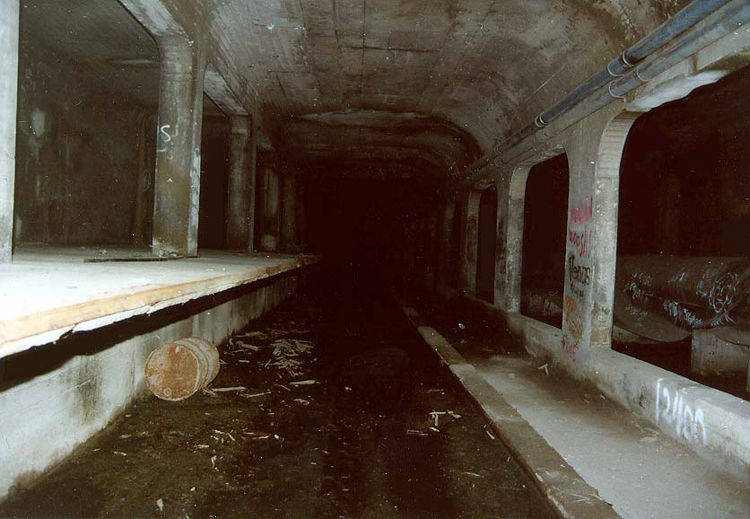
Most major cities have subway systems, but none have a twisted past quite like Cincinnati's. In the early 1900s, when the river trade was flourishing, Cincinnati decided to implement a 16-mile long rapid transit subway loop encircling the city, using the local canals as a guide. Construction officially began in the late 1920s, but work was slow. In the wake of WWI, there was a massive shortage of construction materials — and that was just the beginning of the roadblocks. Subpar planning caused foundations surrounding the route to crumble, and lawsuits began to build. Then, prohibition hit, causing local taverns to close and crippling the city's cash flow. By the time the cash ran out, only a few miles had been constructed, and with the invention of the automobile, people stopped caring about a mass transit system. The tunnels were eventually abandoned and closed to the public, but they still wind beneath the Queen City, serving as a reminder of one of the biggest infrastructure blunders our country has ever seen. Some say that the tunnels have never been put to use because of a paranormal spirit running loose down there, others say that if you listen closely, you can hear footsteps and breathing in the darkness, but everyone agrees that venturing too near is always an eerie experience.Staley Road
New Carlisle, Ohio Staley Road is one of those places that just feels a little spooky. Even in the middle of the day, the trees arch over the roadway, blocking the sun and casting long shadows across the pavement. Legend has it that Elias Staley, who ran a nearby flour mill (now known as the Bloody Barn), went on a murderous rampage one night and still haunts the road. Others believe Satan worshippers used to practice in the area. As a result of these stories, motorists travel to Staley Road on dark nights for a bit of a scare. While most make it out unscathed, some have reported strange things like unusual car trouble or ghostly figures standing alongside the road.The Franklin Castle
Cleveland, Ohio
Photo courtesy of Judge Raymond Pianka via Cleveland Historical
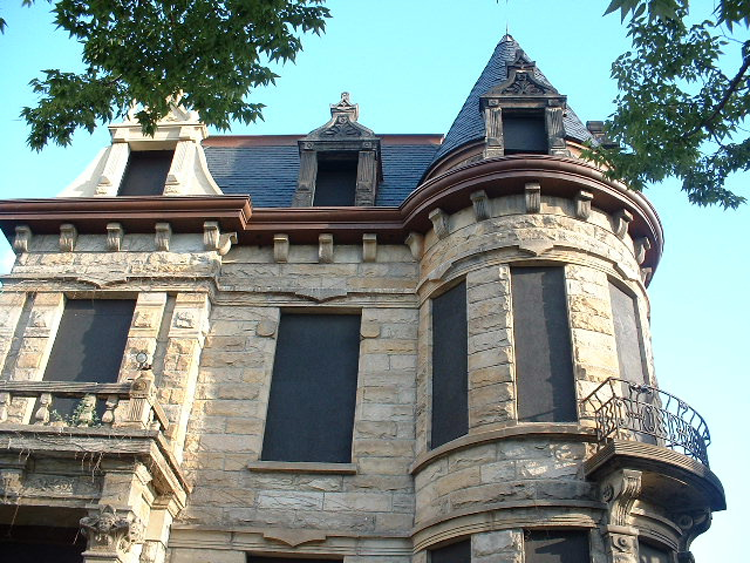
The Franklin Castle is commonly known as the most haunted building in Ohio. The home was constructed in the mid 1800s by Hans Tiedemann, a wealthy German immigrant. The grand house has changed over the years, but the initial construction included 21 rooms, a fourth-floor ballroom, dumbwaiters, wine cellars, hidden passageways and marble fireplaces. That's plenty of room for ghosts, and this building has its fair share. Life was never happy for Tiedemann and his family whilst living on the property. Before construction was finished, Tiedemann lost his mother and young daughter, Emma, to disease. Over the next three years, the family buried three more young children, and eventually Tiedemann's wife, Louise. To take his mind off of the tragedies, the head of the family devoted all of his energy to his home — adding a series of secret passageways and hidden doors, before selling it. The structure was eventually converted into a meeting place for the German Socialist Party during WWI, and then into a residence, and finally into a multi-unit property. Occupants have reported hearing babies crying in the walls and violent yelling that has kept them awake at night. Others have sworn they saw a crying girl upstairs, or a tall, lean woman dressed in black peering out of the second-story windows. Still, others have reported vanishing objects or piles of human bones in the passageways. While there are many rumors surrounding the mansion and the family who built it — one thing is certain: residents in the Franklin Castle never stay very long.The Akron Civic Theatre
Akron, Ohio
Photo courtesy of the Akron Civic Theatre
The Akron Civic Theatre is one of the most stunning examples of architecture in town, boasting a domed, rotating ceiling with beautiful murals, ornate columns and a grand archway over the stage. There's no question that the building is iconic, but rumor has it that a trio of ghosts haunts the stage and the surrounding areas. The first of the trio is a girl who allegedly died by jumping into the canal behind the theater. She can sometimes be seen on dark nights wandering along the edge of the canal, crying uncontrollably. Then, there's the ghost of Fred, an old janitor who used to work in the building, and is rumored to attack those who leave messes in the bathrooms. Finally, theatre-goers have also reported seeing an old man sitting in the upper mezzanine — always impeccably dressed, and no doubt waiting for the next show to start. For most patrons, these ghosts are a welcome presence, and a fun topic of conversation during intermission. Just make sure to leave those bathrooms as clean as you found them.Squire's Castle
Willoughby Hills, Ohio
Photo courtesy of Thom Sheridan via the Cleveland Metroparks
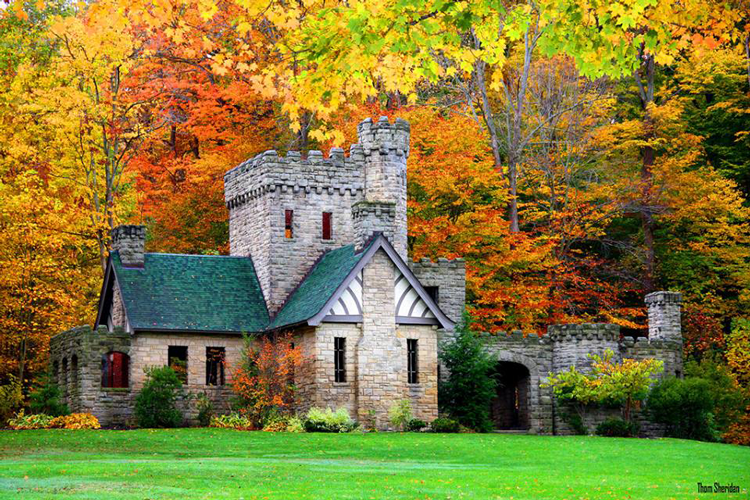
Situated in the heart of the North Chagrin Reservation outside of Cleveland, Squire Castle is a popular destination for afternoon picnickers and photographers — and for good reason. Though the building is in ruin, many of us would feel like royalty if we were lucky enough to live in it. In fact, the building was constructed by Feargus B. Squire in the late 1800s for the gatekeeper. He was planning on building a magnificent estate on the surrounding land for him and his wife, but a tragic incident stopped him from achieving his dream. Squire's wife didn't visit his property much out of hatred for the outdoors, and when she did visit, she suffered from insomnia. Legend has it that she would roam the house at night with a red lantern. One of these nights, she roamed into the trophy room, which was filled with skulls from her husband's hunting adventures. She was startled at the sight of them, and in the darkness she tripped and broke her neck. Of course, Squire was overcome with grief and halted construction on his project immediately. In 1922, he sold the land to Cleveland Metroparks, but some say that the ghost of Mrs. Squire still wanders the property, carrying a red lantern just as she always did.The Sedamsville Rectory
Cincinnati, Ohio The Sedamsville Rectory, which rests in the tiny Sedamsville neighborhood in Cincinnati, was built over 120 years ago. It first belonged to Our Lady of Perpetual Help Church, housing priests that served the community, but this once holy building has since been plagued by violence and tragedy. After being abandoned by the church, the structure was reportedly used as a venue for illegal dog fighting. The current owners have reported feeling ice-cold breezes on uncharacteristically hot days, and being scratched and shoved by unseen forces. They have had the structure investigated by paranormal experts and ghost hunters multiple times.The Golden Lamb
Lebanon, Ohio
Photo courtesy of Haunted Travels USA
The Golden Lamb, which dates back to 1815, is one of Lebanon's most beloved landmarks, but also its most haunted locale. The grand hotel has hosted many influential figures over the years, including Mark Twain, Charles Dickens, and more recently, Sarah Palin, and is also a favorite destination for locals looking for a romantic getaway. But, according to legend, some of these guests never checked out. Rumor has it that there are two ghosts who haunt the Golden Lamb. One is a young girl, believed to be either Sarah Stubbs, daughter of a previous innkeeper, or Eliza Clay, who died onsite from a high fever in 1825. The other is the spirit of Charles R. Sherman, an Ohio Supreme Court Justice who died at the inn in 1829. Neither ghost is aggressive — indeed, we believe that they are happy to be forever at home in such a cozy and cheerful place.Fudge Road Bridge
West Alexandria, Ohio Sometimes referred to as the "Crybaby" bridge, the Fudge Road Bridge is a short and narrow bridge that crosses a small creek in an unassuming stretch of Preble County. According to stories, those who stop their vehicle near the bridge may hear an infant crying if they mutter "mama" three times in a row. In stranger news, there is also said to be a beast who lives in the woods nearby, and sometimes seeks shelter under the bridge. Some have heard it growling as they cross. The decrepit bridge is currently closed to vehicle traffic — in case you needed another reason to steer clear of the area.Scared Yet?
Ohio has a very interesting (and sometimes terrifying) history to be sure. If you're yearning to learn more about it, check out the 14 of Ohio's coolest castles and the fascinating stories behind them.






The Cutler Real Estate® word mark is a registered trademark owned by Cutler and Associates, Inc.
Privacy Policy / DMCA Notice / ADA Accessibility


This site is hosted, designed and copyright
© 1994 - 2026 by
Delta Media Group, Inc. -- Patent Pending --